

The Old Straight Path
It'll take you back

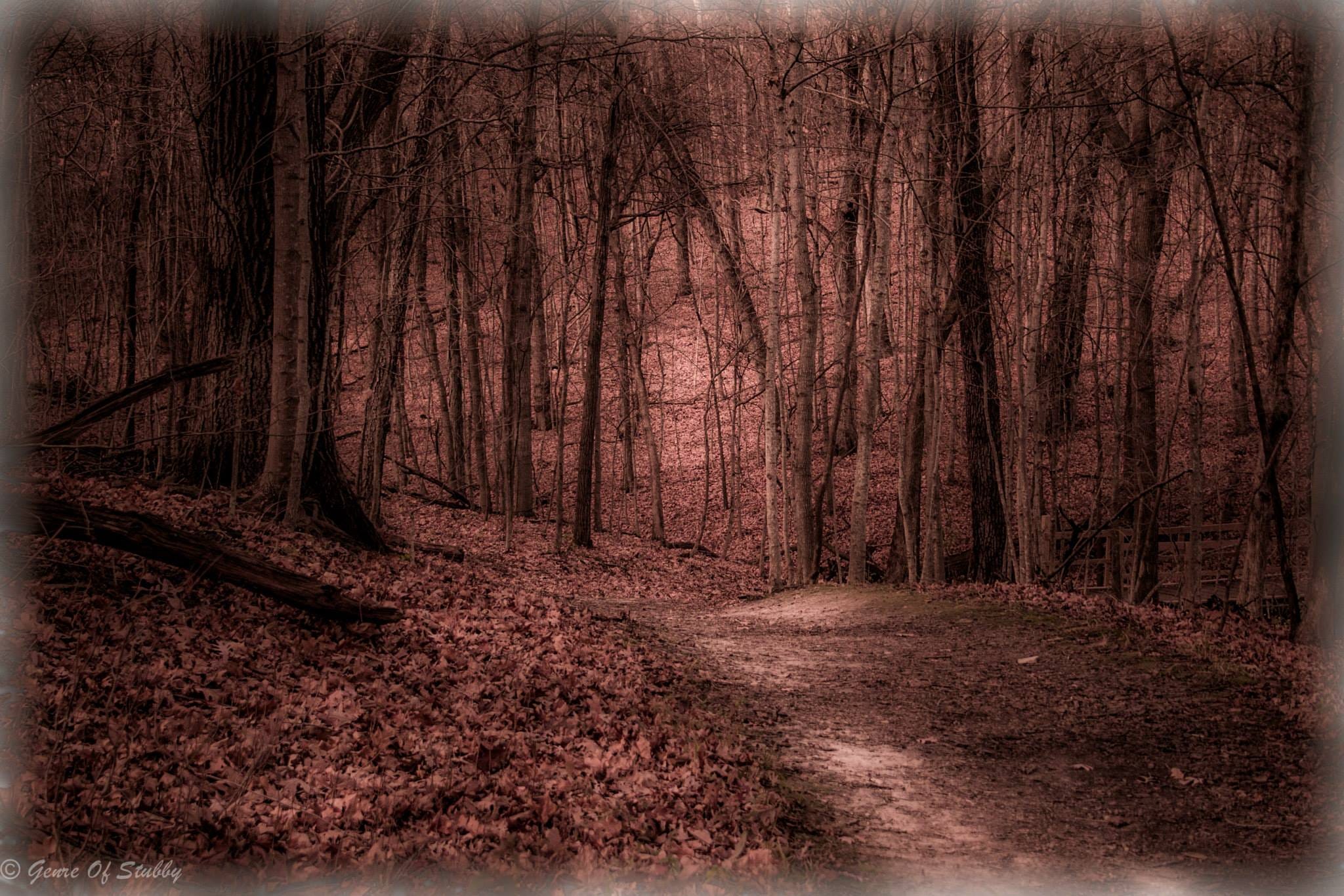
The Old Straight Track, copyright Alma Drake 2014, Creative Commons (Attrib.), released on The Light You Can't See in the Day, 2021
Alma Drake: guitars, vocals
Christine Moad: bass, harmony vocal
Ryan Rumery: drums
Annie Savage: violin
Okay so, not a newsflash: I read a lot.
And many of the books I have read inspire me to write songs, sometimes about a particular line, idea, or even a single word. Sometimes it’s a bigger concept. This song came from a book by Alfred Watkins called The Old Straight Track, about trackways in the UK that connect sacred sites, and churches or cathedrals, and places of great historical import along almost perfectly straight lines.
Okay now, grain of salt time: One cannot swing a dead cat in Britain without hitting a sacred site. You literally can’t take a freaking walk in the park without stomping all over some archaeology of some antiquity or other. Impossible. So the linking of sacred sites, churches, and historical centers via straight lines is, if we’re honest, really not that big of an accomplishment. In fact, Watkins himself cautions the reader against any sort of mystic interpretation about ley lines or magical woo. His theory is that these trackways were not naturally occurring, but that the establishment of churches, stone circles and standing stones, and other monumental things, were the result of people making landmarks in intuitive places in order to facilitate travel. And that makes a hell of a lot of sense. We absolutely know that thousands of churches in Europe were built on top of old Pagan temples, or on the sites of old stone circles (frequently recycling the stone into the new construction), or beside established holy wells. This is not news either.
But gosh, the whole idea of a mystic map of Middle Realm being overlaid upon the surface of the land and accessible to those “with eyes to see” is kind of intoxicating. These trackways are kin to the Songlines of the Australian indigenous people, another fascinating system of magical navigation. I know Iowa used to be home to a thriving indigenous people, the Sac and Fox and the Mesquakie, among others. There are places where you can feel the heartbeats of ancient shamans still reverberating in the trees. What if … Iowa had the same ancient system of trackways, and we just don’t have the eyes to see? What if we’re walking all over archaeology here, too? And walking within a mystic map with every step we take? Oh, please, can we?
Lyrics
We got lost in the woods one evening
We got soaked to the skin, we were freezing
But as night - fell down - we started walking
On a path not marked but long traveled
We found the old straight track
It’ll take you back
Back to the second path
From there you can find your way home
Repeat
Through the dolmen trees, cross the valley below
To the top of the ridge, do you see the stone
Standing tall - alone - a long forgotten marker
Of a way nobody remembers anymore
Follow the old straight track . . .
Lost doesn’t mean forsaken
And there’s magic in not knowing the way
Sometimes you have to get lost in the dark
To see the light you can’t see in the day
By the souls of my feet I know this way
I have walked it before with a different face
And I know - that you - will remember walking
By my side, many times, beyond counting
Walking the old straight track . . .
Gear Box
Alma played a Gallagher A-70 in standard tuning on two separate tracks, one with no capo, and one with a capo at the 5th fret. The provenances of Christine, Ryan and Annie’s instruments are unknown to me.
Songwriter’s Workshop
This song is in the friendly key of G, and features a II-IV-I-V progression in the verses, and a VI-V-I to IV-V-VI (or on the second and fourth lines, IV-V-I) in the chorus, which gets repeated twice. The interplay between Alma’s guitar and Annie’s fiddle are delicious. Annie’s playing here is powerfully reminiscent of the late great John Hartford’s style.
The chord movement is not as direct as the chords make it seem. Am to C to G is all pretty standard with very little finger movement required, lots of common tones, and the D chord is actually that sneak D7 with a F# on the bottom, which is - voila - one finger motion away from an Am chord. It’s a pretty sweet little circle.
The harmonies are tight and focused, and inspired by an arrangement of this song for the Family Folk Machine by Associate Director Jon Ranard back in 2021.
The song is about getting lost, and through increasing awareness of the sacredness of the landscape, finding one’s way - though at the end of the last verse it’s not clear whether the walkers ever did return home, or simply walked off into the sunrise along the ancient trackway.
Sound Healer’s Corner
I had the honor of playing this song at the deathbed of one of my oldest friends, Davy Warren, and watching his anguish and resistance ebb away and profound acceptance and relaxation set in. He was able to make his way to the next world within a few hours. I was so grateful to have had the ability to offer him such comfort.
This song is healing partly because of the idea above, that the more we acknowledge the sacredness of the landscape around us, the more likely we are to find ourselves walking on exactly the right path.
Additionally, the gentle chord movement, including the nicely wavy progression in the chorus, allows for a sweetly rocking sensation, as if we’re being cradled safely in protective arms. The circular nature of the verse chords represents wholeness and completion, even when the singer is “lost in the woods.” Even in a moment of crisis, we can remain whole, curious, and calm, trusting we’ll find our feet on the track that leads to home.
An Invitation
I’ve seen a few Stackers posting about how they would like to use their music or other artistic abilities in a healing way, and I’d love to have a community to geek out with about that very thing. Drop a comment if you’re interested. Maybe we can make the world a better place through music if we do it together.